
How to Follow Up After Applying for a Job
When to follow up, who to contact, and exactly what to say. Includes follow-up email templates and how to track every thread so none go cold.
You polished your resume, clicked submit, and then heard nothing. That silence is the hardest part of any job search. The good news is that a thoughtful follow-up after applying can move your application back to the top of the pile, remind a busy recruiter that you exist, and show that you care about the role. The catch is that there is a right way and a wrong way to do it. Send the wrong message at the wrong time, and you come across as pushy. Send the right one, and you look like exactly the kind of organized, motivated candidate teams want to hire.
Should you follow up after applying at all?
Yes, in most cases. Recruiters and hiring managers are swamped, and applications slip through the cracks all the time. A short, polite follow-up signals genuine interest and can nudge someone to actually open your application. There are a few exceptions. If the job posting explicitly says no calls or emails, respect that. If you applied through a referral, lean on that person instead of cold messaging the recruiter. And if you applied only a day or two ago, wait. A follow-up that lands too early reads as anxious rather than keen.
The goal is not to demand a decision. It is to keep your name visible and make it easy for the right person to act. Treat every follow-up as a small, professional reminder, not a confrontation.
When to follow up: timing that works
Timing is where most people get it wrong. The sweet spot for a follow-up after applying is usually about one to two weeks after you submit. That gives the team time to process the first wave of applications without letting you fade from memory. Here is a simple cadence to follow:
- Days 0 to 7: wait. Resist the urge to message right away. Hiring rarely moves that fast.
- One to two weeks after applying: send your first follow-up email reaffirming your interest.
- If still silent after another one to two weeks: one final, brief check-in is acceptable. After that, move on and keep applying elsewhere.
Interview follow-up runs on a faster clock. Send a thank-you message within 24 hours of any interview, ideally the same day while the conversation is fresh. That note is partly courtesy and partly strategy: it keeps you memorable while the panel is still comparing candidates.
Who to contact and how to find them
A follow-up only works if it reaches a real person. Aim for one of two targets:
- The recruiter who is coordinating the role. They control the pipeline and can tell you where your application stands.
- The hiring manager, the person you would actually report to. A message here shows you understand the role and care about the team, not just the title.
To find them, start with the job posting itself, which sometimes names the recruiter. Then check the company page on LinkedIn and search for titles like Recruiter, Talent Acquisition, or the manager of the department you applied to. If you already exchanged emails through an application portal, reply in that same thread so your message has context. When you have a name but no email, common corporate formats such as [email protected] are a reasonable guess, though a LinkedIn message is often the safer first move.
What to say in your follow-up email
Keep it short. Three or four sentences is plenty. A strong follow-up email does four things: it reintroduces you, names the specific role and when you applied, restates your interest with one concrete reason you are a fit, and closes with a low-pressure question. Avoid apologizing for reaching out and avoid long restatements of your resume. Make it easy to skim and easy to reply to.
Template: following up after applying
Subject: Following up on my application for [Role]
Hi [Name], I applied for the [Role] position on [date] and wanted to reaffirm how interested I am in joining [Company]. My background in [relevant skill or result] lines up closely with what the role calls for, and I would love to contribute to [team or goal]. Is there anything else I can share to help with your review? Thanks for your time. Best, [Your name]
The post-interview thank-you and follow-up
After an interview, a same-day note does double duty. It thanks the people who met with you and reinforces why you are the right hire. Reference one specific thing from the conversation so the message feels personal rather than copied. If you forgot to mention something relevant, this is your chance to add it briefly.
Template: post-interview thank-you
Subject: Thank you for the [Role] conversation
Hi [Name], thank you for taking the time to talk through the [Role] today. I especially enjoyed hearing about [specific topic from the interview], and it made me even more excited about the opportunity. Our discussion of [challenge or project] reinforced that my experience with [relevant skill] could help right away. Please let me know if there is anything else you need from me. Best, [Your name]
Keep follow-up threads from going cold
The biggest reason follow-ups fail is not bad wording. It is losing track of them. When you are applying to dozens of roles, it is easy to forget who you messaged, when, and whether they replied. A thread that never gets a second nudge quietly goes cold, and a promising lead dies of neglect.
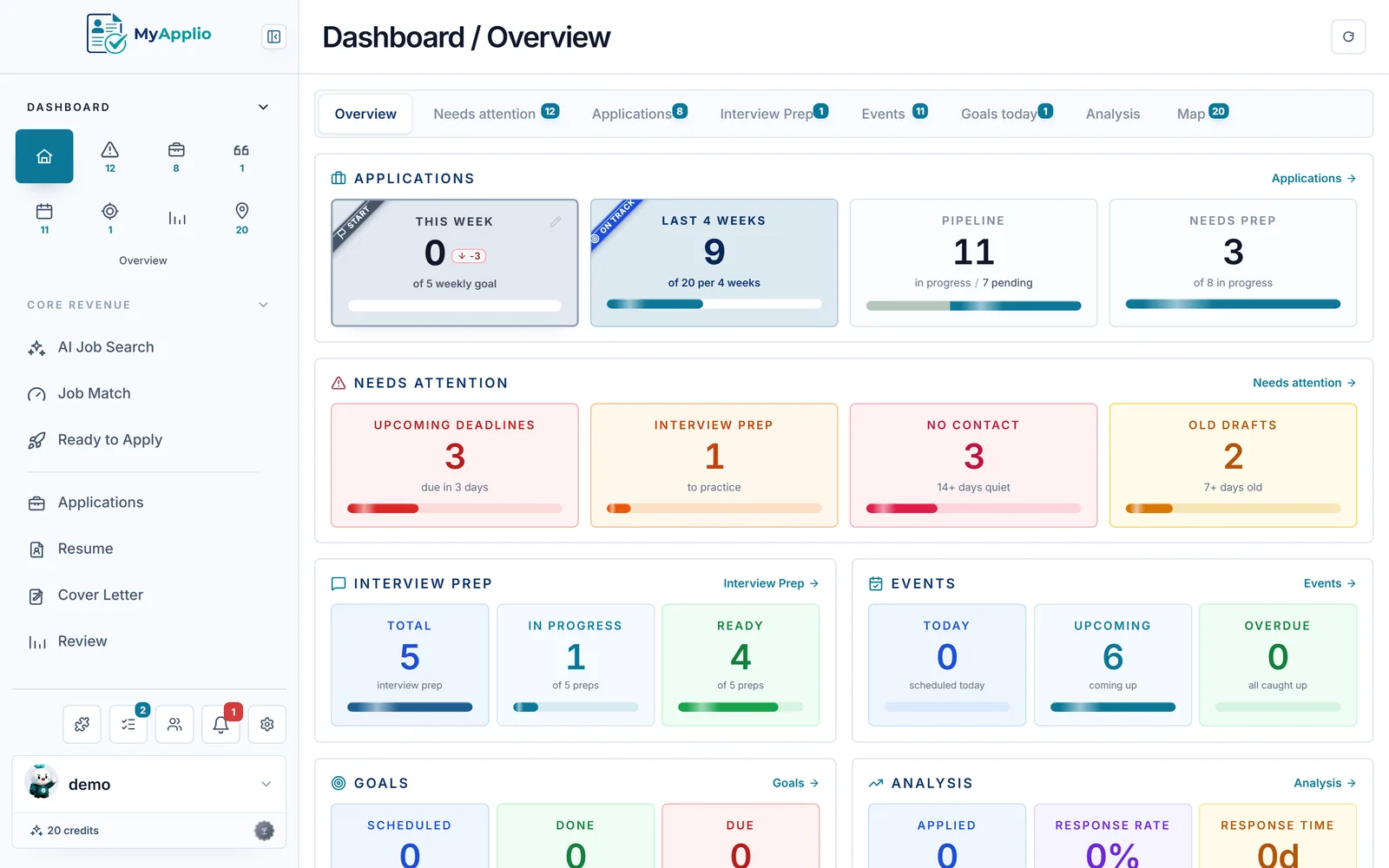
The fix is to track every application and every touchpoint in one place. For each role, record the date you applied, the contact name, the date you followed up, and the next action with a due date. A dedicated a job application tracker makes this almost automatic, so you can see at a glance which threads need a nudge and which have gone quiet. Even a simple board with statuses like applied, followed up, interviewing, and closed will keep you from dropping the ball.
Common follow-up mistakes to avoid
A few habits undo even a well-timed message. Watch out for these:
- Following up too often. Messaging every few days reads as desperate and can get you screened out. Space your touches by a week or more.
- Sending generic messages. A copy-pasted note with no role name or specific detail tells the reader you are blasting everyone. Tailor each one.
- Being vague or demanding. Do not ask for a decision or imply they owe you a reply. Offer help and keep the tone warm.
- Typos and wrong names. A follow-up is a writing sample. Double-check the company name, the role, and your contact before you hit send.
Conclusion
Following up after applying is a small move with an outsized payoff. Wait about one to two weeks after you apply, send a short and specific message to the recruiter or hiring manager, and follow any interview with a same-day thank-you. Then track every thread so none of them go cold. Do that consistently and you turn the silence after submitting into real conversations, and more of those conversations into offers.
Put this into practice for free.
Capture jobs in one click, tailor your documents, and track every application in one workspace.